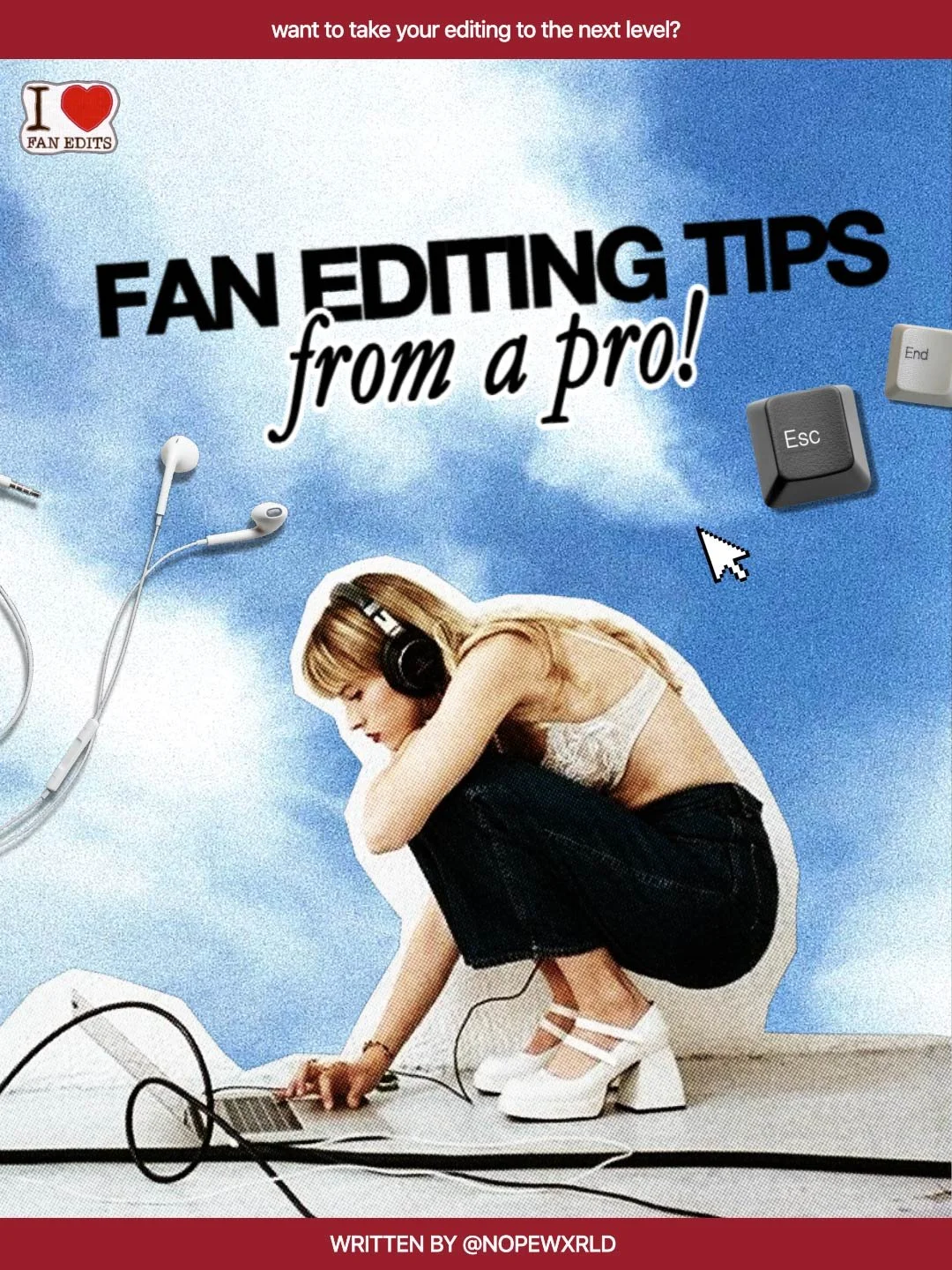
Fan Editing Tips From A Pro
Written by by @nopewxrld May 4, 2026Journal Entry #4The title for this journal entry called to mind an image of myself about 4 years younger. I’d found another fan editor whose style was so mesmerizing to me that I’d spent a half hour looking at their work and, for the first time, wanted more than anything to reach their skill level. Everyone has a turning point in their creative journey, and that was mine. In the years since, I’ve tried different
ways to improve; and in true fan editor spirit, I’ve listed the most helpful ones here! Write to editors you admire - If there is an editor whose work you love and whose skill level you’d like to reach, don’t feel scared or embarrassed to reach out to them! We’re a community that all share a hobby. I’ve found that even editors with a large following have been happy to talk about how they craft their edits.
REALLY get to know your editing software - It sounds basic, but beautiful work comes from being so familiar with the features of your editing software that it feels like an extension of your hand. If there’s a corner of the program you use that scares you a little because it looks too advanced, start chipping away at it! Look for youtubers that specialize in the software you use and slowly get to know all the different things it’s capable of doing. Curate a theme for each edit - When you get your next edit idea, treat it like a creative director would treat an ad campaign. Write down the things about the subject of your edit that you’d like to highlight, and what you’d like your audience to think and feel. Identify any visual elements related to your subject that you can incorporate in the aesthetics of your edit. Use those keywords to look for visual references for typography, coloring and composition. (I personally use Pinterest boards for each of my edits.)
Never underestimate color - If you use a coloring preset from another editor or from a previous edit, make sure it’s compatible with your clips. Common issues I’ve seen are: clips looking washed out because they have more prominent lighting, clips with less prominent lighting being barely visible, and edits looking overly desaturated because the preset is incompatible with the media’s
original grading. If you notice an issue like that in your edit, don’t ignore it! Go into the individual color settings of your problem clip and adjust the exposure, saturation, or contrast until you’re satisfied. Or, if a preset just isn’t compatible, try making a custom one that suits the mood and colors of your current project. It’s a tedious but small step that really makes a difference. Study the basics of editing - When editing, watch your edits back and think: how does the next clip you’ve added flow with the previous clip? What makes a good cut? Is there more to it than being on beat? Learning about editing theory is a great way to further develop your natural intuition and put a name to your hunches. Out of everything, this is the skill that I would most recommend developing. That intuition is something that no advancement in AI can take away from you; it’s what makes our art human! In the Blink of an Eye by Walter Murch (editor of movies like The Godfather and Apocalypse Now) has been majorly helpful for me in trying to understand editing better as a whole. If reading isn’t really your thing, (no judgment) some YouTube channels that are also very helpful are The Rough
Cut, Digital Spaghetti, Thomas Flight, and Imagine That Films. These are practices that have helped me that I’ve found in my journey shaping my work, I hope they can aid yours. We’re always learning, never not learning. The road to improvement is endless.Whenever I feel the need to take a step to grow further, these are the cornerstone practices I come back to., guys! It’s Alyvids here to give a recap of my first Coachella experience. As it was hot, dusty, and expensive, I couldn’t help but wonder… is the FOMO people feel valid? Short answer, yes. Absolutely. The long answer starts now!
-lei